
Uterine Artery Embolisation for Fibroids
What is Uterine Artery Embolisation?
Uterine Artery Embolisation, also known as Uterine Fibroid Embolisation (UFE), is a minimally invasive procedure that treats fibroids by blocking their blood supply. This causes fibroids to shrink while relieving symptoms and preserving the uterus. It’s a minimally invasive procedure that allows us to treat, and in most cases, cure fibroids without surgery. This procedure effectively addresses fibroid symptoms such as heavy menstrual bleeding, pain, and pressure.
How is the Uterine Artery Embolisation procedure performed?
The uterine artery embolisation procedure is quite straightforward as we use a small flexible tube called a catheter. We introduce it into the artery that supplies the blood to the fibroid, and using image guidance or X-rays, identify the blood supply to the fibroid.
We inject a very small amount of what looks like a small salt crystal into the blood vessel, which blocks the blood supply to the fibroid. We do this only to the fibroid, not the ovaries, womb, or uterus. The fibroids then die and naturally shrink. This fibroids treatment results in symptom resolution.
Who performs Uterine Artery Embolisation?
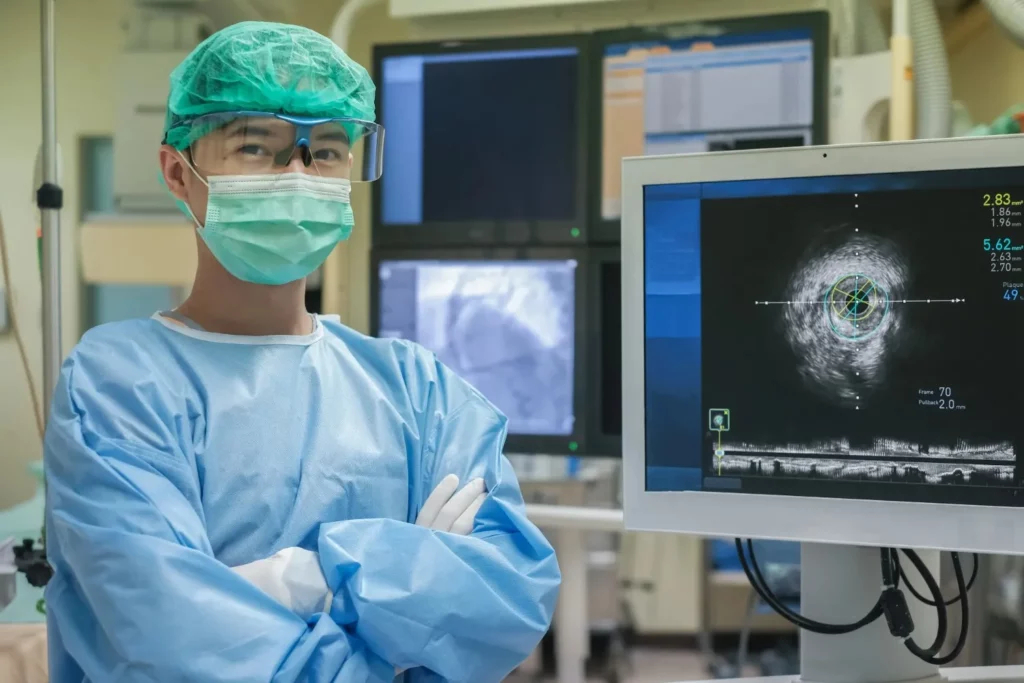
A highly skilled interventional radiologist performs the uterine artery procedure, Interventional Radiology is a specialized branch of radiology that focuses on using minimally invasive, image-guided procedures to diagnose and treat diseases across almost every organ system. By using the least invasive techniques available, interventional radiologists aim to reduce patient risk and enhance overall health outcomes.
Results of Uterine Artery Embolisation
Fortunately, the success rate in competent hands for patients who have undergone this fibroid treatment exceeds 95%, and by that we mean, almost 100% of patients who are selected appropriately get symptom resolution.
So if you are a woman suffering from heavy periods related to fibroids and you are treated with embolisation, there is a very good chance for those symptoms to resolve completely after the procedure. Uterine Artery Embolisation is not the answer to all fibroids but is an extremely good and very safe form of treatment to offer to patients. Patients often ask about the side effects of this form of fibroid treatment.
The first one is that there is pain after the procedure which you will have to undergo unfortunately for the procedure to work. It is not unbearable and is manageable. As far as true dangerous side effects are concerned, the profile is exceptionally low. The risk of infection and bleeding is low. The risk of destroying the blood supply to unrelated organs, i.e. the womb, ovaries, or bladder, is also extremely low. The nice thing about Uterine Artery Embolisation is that you have a high impact value for a very low complication profile.
FAQs
Is Uterine Artery Embolisation the same as UFE?
Yes. Uterine Artery Embolisation and Uterine Fibroid Embolisation (UFE) refer to the same procedure.
How long does it take to recover from UFE?
Most women recover more quickly than they would after surgery and can return to normal activities within a shorter period.
How does UFE treat fibroids?
During UFE, tiny particles are injected into the uterine arteries through a small catheter. These particles block the blood flow to the fibroids while preserving the healthy tissue of the uterus.
Need Information on Fibroids Treatment?
At Fibroid Care, we specialise in uterine fibroid embolisation(UFE), a safe minimally invasive alternative to surgery.
We are available to guide you through the process, answer your questions and help you make an informed decision.
Reach out to today for expert advice, or book a consultation to discuss the symptoms and treatment in more detail.